.png)

If you've ever registered a group for a conference, you know the pattern most registration systems still follow: pick a ticket type, enter a name, pick another ticket, enter a name again. It's a model built around the ticket as the unit of work, with the person as an afterthought — and it's the industry default, not something anyone chose on purpose.
We don't think that's good enough, and we're not interested in standing still on it. Registration is often the first real interaction someone has with your event, it's a direct revenue line, and it's the single place where a confusing form can cost you a completed sale. That's exactly why we've been investing heavily here, and this quarter marks the first major step in an evolution that continues well into 2027: a rebuild of group registration, with a lot more still to come.
People, not tickets
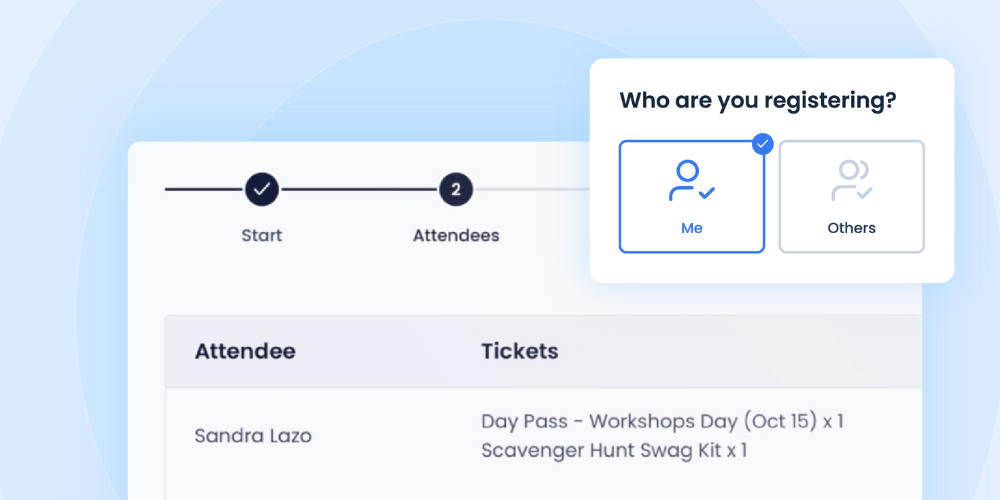
Most registration flows ask registrants to think like a database: buy four tickets, then go name four people. We've pushed past that. Now, registrants add an attendee, give them everything they're attending — sessions, add-ons, whatever applies — then move to the next person. Each person's information is entered exactly once, no matter how many tickets or items they're tied to.
It sounds like a small reordering. In practice, it's the difference between a registration flow that works against your group registrants and one that works the way they already think.
Less friction, more completed registrations
Every re-typed name, re-entered email, and repeated custom question is a place someone can stall out or abandon the form entirely — and group registrations, with the most repetition, are where that drop-off hits hardest. By removing the repetition, fewer people bail partway through. That's not just a better experience; it shows up directly in completed registrations and revenue, which is exactly the kind of thing worth paying attention to when you're comparing platforms that all claim to be "easy to use."
Smarter for organizations with members
This is the piece we think matters most if you're evaluating PheedLoop specifically because you run an association, chapter, or membership-based event. If you've got your AMS connected, PheedLoop now recognizes attendees against their own membership record the moment they sign in and applies the right tags automatically. Members see member pricing and the tickets they're eligible for. Non-members see what applies to them. Nobody on your team is manually checking membership status or policing who gets access to what. It's one more place where a platform built specifically for associations — rather than a generic event tool with an "associations" use case bolted on — shows the difference.
Phase one of a much bigger investment
Group registration was the first place we focused because it's where the impact is biggest and most immediate. But it's one piece of a much larger body of work. Over the coming releases and into 2027, registration is going to keep evolving, and this update is the foundation the rest gets built on.
If you're evaluating event platforms and want registration that was actually designed around how people register — not retrofitted onto a ticketing system — this is worth a look.

.png)
.png)